
The Shiny Heinie Club

“When pride comes, then comes shame; But with the humble is wisdom.”
- Proverbs 11:2

At the lake, one of the most ignoble clubs you can join is the Shiny Heinie Club! Induction involves being pulled violently behind the boat on a tube (or anything) at such a speed that impacting the water rips your swimsuit off and you have to reenter the boat shiny heinie and all.

In my younger days, Wendy and I would regularly go to the lake with three other couples. It was always extreme. We would barefoot ski until I would return home with bruises from my shoulders to mid-thighs. However, I always took precautions to guard against admittance into the Shiny Heinie Club. I would wear long shorts and tie the draw string extra tight every time I entered the water.

One day, I was bragging about my prowess on the water. Brian responded with a smirk that he could throw me off a tube in a heartbeat. I laughed. I entered the water, climbed on the tube and prepared for what would be the most intense ride of my life. Throttle to the max, he was flying across the lake. He would turn and I would swing to the side. At times the momentum would hurl me in front of the boat. Then the slack would catch and it felt as if my arms would be ripped off. On those frantic swings the only way I could stay on the tube was to intentionally barrel roll with it skipping on top of the water. Eventually, after what felt like a lifetime, he hurled me from the tube.

As the boat pulled up to gather me, my entire body was both numb and tingling at the same time. I climbed into the boat. I walked from the back of the boat to the front where my wife sat. No one said a word. It wasn’t till I got to the front of the boat and turned around to sit down that my wife started in exclamation. The shorts I was wearing had a pocket on the back. As I was skipping on the water, the water caught the pocket and ripped the entire back of my shorts off. I could’t feel it because I was beat to a pulp and numb. It was a long rest of the day enduring the hazing of having joined the Shiny Heinie Club!

It is too easy to succumb to pride. We sail along with winds of success and accomplishment powering our progress. We develop a sense of competence. With self-confidence and assurance in our pocket we take the wheel and say, “Watch this!” It is that very self-confidence and assurance that ultimately leads to ripping away our protection and exposing us to shame.

Proverbs 11:2 warns us, “When pride comes, then comes shame; but with the humble is wisdom.” Pride led me to believe I was challenging Brian, but I wasn’t. I was challenging a boat that had more power than I could ever handle. It was filled with fuel that would outlast any effort I could ever muster.

How easy it is for us to do the same in life. We think we are dealing with people we can beat, outsmart, outperform, outwit and control. Yet, the truth is we are dealing with powers far beyond our meager efforts. Ephesians 6:12 tells us, “For we do not wrestle against flesh and blood, but against principalities, against powers, against rulers of the darkness of this age, against spiritual hosts of wickedness in the heavenly places.” Yet, we want to grab the wheel and say, “Watch this!”

Being humble means seeing yourself as you truly are in the world. Neither greater, nor lesser. True humility is understanding everyday we face powers far greater than what we can see or comprehend. Understanding we can not overpower them on our own. If we try, we will be exposed and left in shame. Humility is coming to the point we realize we need someone else to drive the boat! Someone who cares deeply for us and only wants what is best for our lives.

Humility becomes wisdom when we relinquish control. Walk by faith, trusting in our Lord to work through our lives. No matter how powerful the forces against us may be, they are nothing compared to Jesus Christ. There is no shame to be found when we trust the One who has told us, “In the world you will have tribulation; but be of good cheer, I have overcome the world.” (John 16:33)

© 2026 Warren Martin. All rights Reserved.
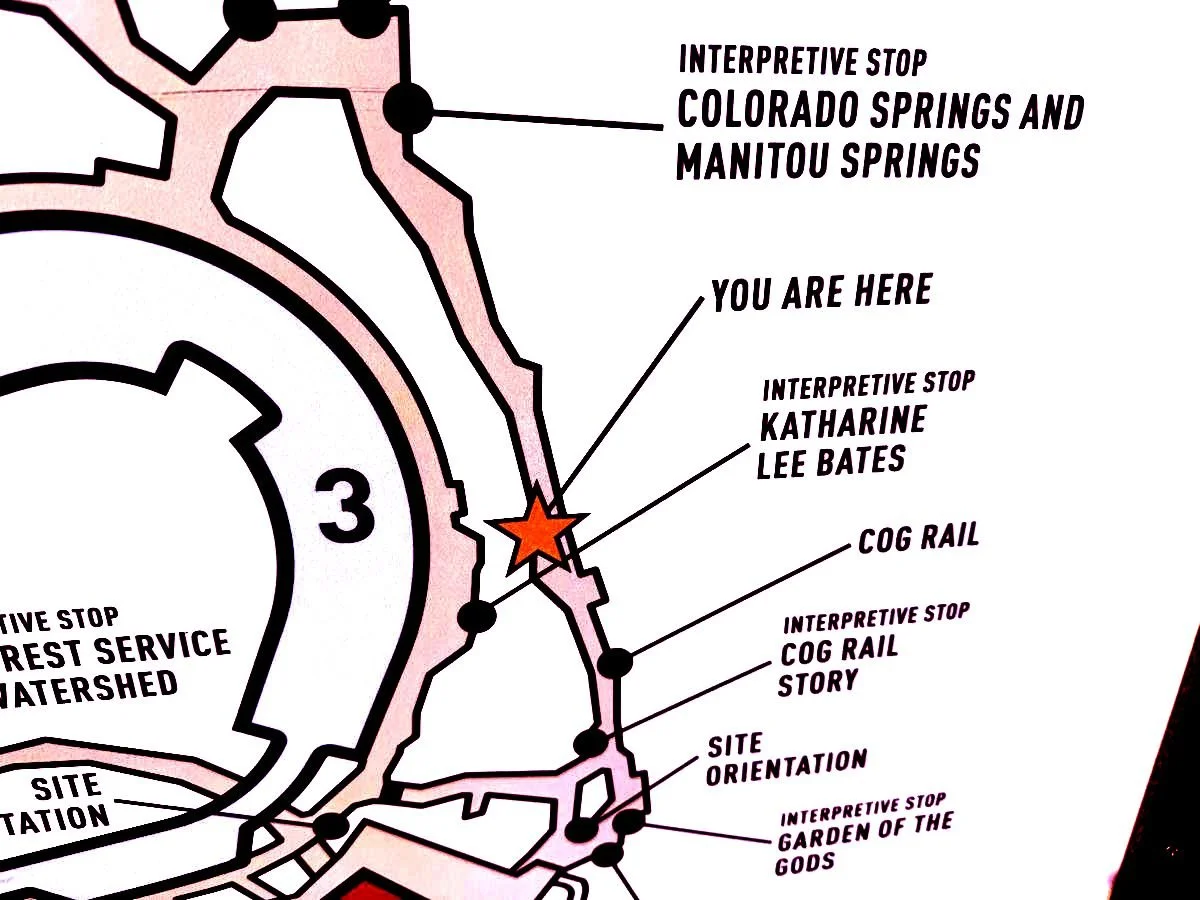
You Are Here

“The Lord will guide you continually, …”
- Isaiah 58:11

Spiritually, an inability to accurately identify your position (and more importantly how you arrived at it) can undermine your growth. Everyone has made decisions which led to our current position. Understanding where we are enables us to chart a new path forward.

Reading maps is becoming a lost art. I love maps. In fact, my journals are filled with several maps I’ve drawn from towns and villages in which I worked overseas. I see things in my head as a map. GPS has changed all that for most people. We type in an address and follow the line never seeing more than a couple miles in front of us.

I’m always humored by maps at attractions like parks. They have all the normal indicators you would find on a map: North, structures, landmarks, legend and map scale. However, the most prominent feature on those maps—usually in red—is the marker “You Are Here.” It denotes the physical location of your current position.

In orienteering (using only a map and compass) there are three primary things you have to know: 1) your current location, 2) your destination, and 3) how to identify landmarks to guide your progress; i.e. reading a map. Normally, you have to identify landmarks to figure out where you are on the map at the start. Attractions save you this trouble by placing the largest identifier on the map there for you with “You Are Here.”

Sometimes, we want the same identifier in our spiritual life. Just tell me where I am. Yet, it is crucial to be able to identify the markers along the way that got you to this point. It is vital to align those with the map—God’s Word—and calibrate them with the compass—Christ—to gain an understanding of our current position. Otherwise we are just as likely to make the same decisions, turns, and take the same paths that led us to this point.

Praise God, as Isaiah writes, “The Lord will guide you continually,…”. However, to be guided we must refer to the map. We must utilize the compass. A major part of the effort is to identify where we are on the map. What was the path we took to get here? But where you are is not the most important thing on the map. It is all about where are you going.

You can’t go down the same old path to get to a new place. You can’t keep making the same decisions and expect a different outcome. You can’t remain who you are and become you desire to be. You have to identify where you are and leave those things behind to experience the new and glorious.

If we took a moment to consider, often we would find we are where we are because we have expected Christ to join us, rather than us joining Him. His Word is our map. He is our compass. As Colossians 2:6 encourages us, “As you therefore have received Christ Jesus the Lord, so walk in Him.”

How did we receive him? We had nothing to offer. We could not bring anything to the table. We had to put all that we are into His hands. And He worked in and through us for our salvation. We are to walk the same. Not according to our own plans, desires, passions or opportunities. We are to put each step into His hands. We are to consistently refer to the true map and compass, and allow Him to work through our lives.

It is of little import where you are on the map beyond having a starting point. Nor does it really matter what route you take. What does matter is that you read the map, trust the compass and follow the route they chart. That route is for your good. It is for your benefit.

If you desire to be all God created you to be, you cannot remain who you are today. Perhaps it is time to pull out the Map, consult the Compass and chart a new direction. And know if you trust Him, “The Lord will guide you continually,…”

© 2026 Warren Martin. All rights Reserved.
Hard Questions

“If any of you lacks wisdom, let him ask of God, who gives to all liberally and without reproach, and it will be given to him.”
- James 1:5

Hard questions abound. Whether you are talking about understanding God, yourself, your spouse, your kids, the world or even trying to figure out how to make a $100 in the bank account cover a $400 payment due. Some of the hardest can come from the lips of a child armed with only one relentless, unending question: why?

We all struggle with hard questions. Some are hard because they are unanswerable, impractical, lost to history, marred by our past, limited by our resources…shall I keep going? Some are hard simply because we are ignorant. I don’t mean that as a disparaging comment. I mean it literally; we just don’t know what we need to know to answer the question.

None of us have all the answers. Some days I’m just content to have one. As a speaker I have been confronted publicly with many hard questions. Sometimes my answers just stink. Other times I have none. I’m not alone. None of us are perfect.

Martin Luther is well documented as having had an “abrasive, contentious, and often vulgar, communication style”. It has been said that he was once asked by a student, “What was God doing before He created the world?” Luther quickly responded, “He sat under a birch tree in the woods cutting switches to punish people with nosey questions!” (Several variations of this quote exist. I utilize a paraphrase from memory out of the audio book by historian Daniel J. Boorstin, The Creators, 1992)

Why is it we feel we have to have all the answers? Why is it we think we cannot fully commit to our Lord if we have any doubts?

Socrates is considered by many to be one of the wisest people who ever lived. However, his entire philosophy was built on the concept that he had no answers. Only questions. The Socratic paradox was his statement, “I know that I know nothing.”

I want to know everything. Yet, everything I learn only leads me to more questions. And that is a good thing.

Never fear ignorance or the inability to answer hard questions. What we should fear is being satisfied with what we know. Being comfortable with our knowledge. What a tragic position to be in to be comfortable in our limited understanding.

Even worse is when, in our ignorance, we simply adopt what others say. Others may lead, challenge and enlighten. However, in all the information they share, you will never find the answer you truly desire. It can only be found in the Word—in Christ.

Jesus said in Matthew 7:7-8, “Ask, and it will be given to you; seek, and you will find; knock, and it will be opened to you. For everyone who asks receives, and he who seeks finds, and to him who knocks it will be opened.” Questions and doubts are meant to bring us to the Lord. They are ever present to draw us to Him. They are a catalyst.

Questions and doubts can unlock spiritual growth if we handle them properly. By that I mean, if we take them to our Lord. As James 1:5 states, “If any of you lacks wisdom, let him ask of God, who gives to all liberally and without reproach, and it will be given to him.”

The Lord is the Word. The Word of God is the Bible. The Bible is our constitution. A constitution means a document that establishes. Truth is established in God’s Word. His answers will always align with His Word. THE ANSWER can only become OUR ANSWER when we ask Him, seek Him and knock at His door.

Got hard questions? Ask. Seek. Knock. The wisdom you need for this moment to walk in Christ will be given to you! Then keep asking—moment by moment, day by day.

© 2026 Warren Martin. All rights Reserved.

I've Been Robbed

“The thief does not come except to steal, and to kill, and to destroy. I have come that they may have life, and that they may have it more abundantly.”
- John 10:10

Yesterday, I received a call from the storage company where we store our camper. They were the target of a theft and our camper was one of more than dozen hit. The thieves stole primarily propane bottles from all the campers they could. Minor damage in cost, but it is like getting punched in the stomach when someone steals from you. Especially, when I believe, I would have been happy to buy you a bottle of propane if you needed it.

The worst I’ve experienced was years ago. Wendy and I took into our house an 18 year old boy who had been kicked out of his house. The superintendent of the high school asked us if we would be willing to take him in for a few months so he could finish school. I was working with the youth at the school and we gladly took him in.

One weekend, while Wendy and I were away (and he was supposed to be at an event), he threw a party in our house. He and his friends stole several of the guns I had received after the passing of my grandfather and my brother. They made it look like a break-in and we called the police. Unfortunately, his friends used the guns to go shoot up the house of someone they didn’t like. No one was hurt, but they were arrested. The guns were seized (and lost) as part of the case. And the young man, to my knowledge, never finished high school.

I will never forget the feeling of betrayal. I didn’t just lose trust in the young man, I lost a little trust in all people.

Khaled Hosseini, in his blockbuster book The Kite Runner (2003), writes, “There is only one sin, only one. And that is theft. Every other sin is a variation of theft. When you kill a man, you steal a life. You steal his wife’s right to a husband, rob his children of a father. When you tell a lie, you steal someone’s right to the truth. When you cheat, you steal the right to fairness.”

One could debate the minutia of his argument, but there is something true in it. Jesus said, “The thief does not come except to steal, and to kill, and to destroy. I have come that they may have life, and that they may have it more abundantly.”

I was struck in this moment by the stark reality that I am a thief. We all are. Every time we lie, compromise our values, are apathetic to the truth, etc. Every time we sin in anyway, we steal from God, ourselves and others.

Don’t get me wrong: my righteousness is established and sustained by who Christ is, not what I have done. All of my sins (past, present and future) were in Him on the cross. They were dealt with once and for all so I could stand in the holiness of Christ. This is not about salvation. It is about life.

Life is a two for one deal. For every choice, you get a free consequence. Every moment we walk in Christ we expand life. We expand life for ourselves and those around us. Every moment we choose to walk in the flesh, we steal life from ourselves and others.

I believe this is why Paul wrote in 1 Corinthians 10:23, “All things are lawful for me, but not all things are helpful; all things are lawful for me, but not all edify.” Paul is saying, there is nothing you can do to negate your salvation. Your eternal security was established by Christ. However, some things we do steal life. They take away from experiencing the abundant life we have in Christ. They rob us of sharing that life with the people around us.

I’m challenged this week to turn my eyes away from the thief who took my property. If they needed the propane for warmth or money, I pray they would find warmth in Christ and riches in His life. I have a bigger thief to deal with in myself. I don’t want to steal life from others or myself. I want to expand life to those around me. I want to walk in the abundance of life which can only be found in Christ.

Every choice we make either steals from life, or expands it. There is no in between. Lord, help me to choose well.

© 2026 Warren Martin. All rights Reserved.

A Path Forward

“He shall not return by way of the gate through which he came, but shall go out through the opposite gate.” — Ezekiel 46:9b

“Two roads diverged in a wood, and I—
I took the one less traveled by,
And that has made all the difference.”
—Robert Frost, The Road Not Taken (1916) 
Full Poem

In his poem “The Road Not Taken,” Robert Frost provides us with the poetic anthem of individualism. One of the most quoted stanzas from a poem in history. Complete with posters, calendars, screen savers and more to challenge us not to follow the path of the crowd, but choose the path less travelled. The only problem is that’s not what the poem says in context.

The poem was written to Frost’s English friend Edward Thomas. Frost stayed in England for a time and would regularly walk in the woods with Thomas. When they came to forks in the trail, they would debate which way they should take. Inevitably, no matter what path they took, Thomas would bemoan they should have taken the other path. It undoubtedly would have been more beautiful and exciting.

Frost wrote the poem to poke fun at his friend. In reality, neither path in the poem is any better than the other. Frost takes the juxtaposition of his friend in the conclusion of the poem by saying, “I shall be telling this with a sigh / Somewhere ages and ages hence: / Two roads diverged in a wood, and I — / I took the one less traveled by, / And that has made all the difference.” Frost in his “sigh” acknowledges the mourning of lost knowledge at what lies down the other path, but then turns his friend’s approach on its head and justifies the path he has taken.

The poem is not about individuality. It is about how we reflect on our path. Do we regret the paths we didn’t take? Or do we justify the paths we do? And, have we ever even considered the path we are on?

In Ezekiel chapters 40-48, the prophet is provided a vision of God’s ideal temple. Interpreted in many ways, it is to me symbolic of the spiritual temple that Christ established as the church. In Ezekiel 46, the vision deals with the manner in which followers should worship God. In verse 9 it reads, “But when the people of the land come before the Lord…He shall not return by way of the gate through which he came, but shall go out through the opposite gate.”

In other words, something is supposed to change when you come into the presence of the Lord. You are not to return to your same old path. You have a new path going forward.

Several times in the Bible, people are told not to return by the path they came. In Matthew 2:12 the Magi (Wise Men) were divinely warned in a dream not to return the same way, but to go home another way. In 1 Kings 13:17, the old prophet is told to deliver his message, but don’t commune with the people, “nor return by going the way you came.”

What is consistent about all these verses is God’s Word should create change. We can’t grow in the grace and knowledge of Christ and continue walking the way we always walked. Grace should change you. It should overwhelm you. It should open the gate to a path forward in Christ. If it doesn’t, you don’t understand grace. You don’t understand life in Christ.

However, don’t succumb to the temptation of becoming path inspectors. We often want to look at the path someone has traversed to measure their faith. We equally want to evaluate our own path for the same reason. The end result of this effort is to become the joke in Frost’s poem that justifies the path we’ve taken or bemoans the path not taken like his friend Thomas. The path is irrelevant. It is a relationship with Christ that creates change. And everyday there is a path forward. You can’t go back. You can only go forward.

Again, the path is irrelevant. The only thing that matters is the next step. “Your word is a lamp to my feet / And a light to my path.” (Psalm 119:105) Notice the path is not what makes the difference. It is the light. It is meeting God in His Word that changes us. It is when His Word is lived out through our life our path is changed.

What is God’s direction for your life? You can’t go back. Don’t bemoan the paths you’ve missed. Don’t justify the ones you’ve taken. Whatever path you are on today, stop and come into the presence of the Lord. Let His word be a lamp to your feet and a light to your path. Allow Him to live through your life. Then, go forward! Trust the Lord to guide your steps. The path doesn’t make a difference unless we get stuck returning to the paths of our past.

Don’t go back the way you came. Move forward. The Lord is the Light. And He will light the path forward if we will trust Him.

© 2026 Warren Martin. All rights Reserved.